

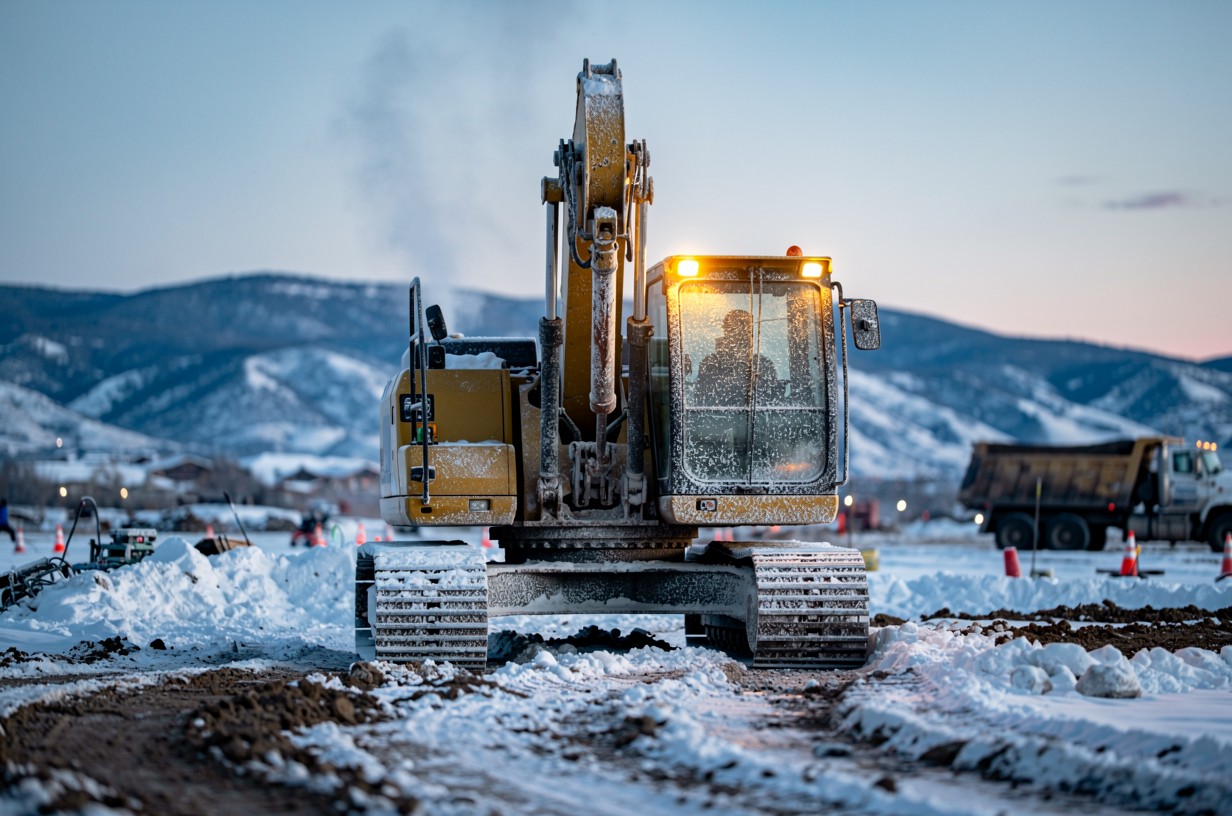
The fuel you burn going nowhere
A running engine that isn’t doing work is called idling. On a construction site, that means an excavator waiting for a truck, a loader warming up, or a dozer left running over lunch. It feels harmless. It isn’t.
Industry estimates say 10–30% of the fuel burned by construction equipment goes to nonproductive idling. That fuel moves no dirt, pours no concrete, and lays no pipe.
The good news is that idling is measurable. Once you can measure it, you can reduce it. The tool that does the measuring is telematics.
What telematics is
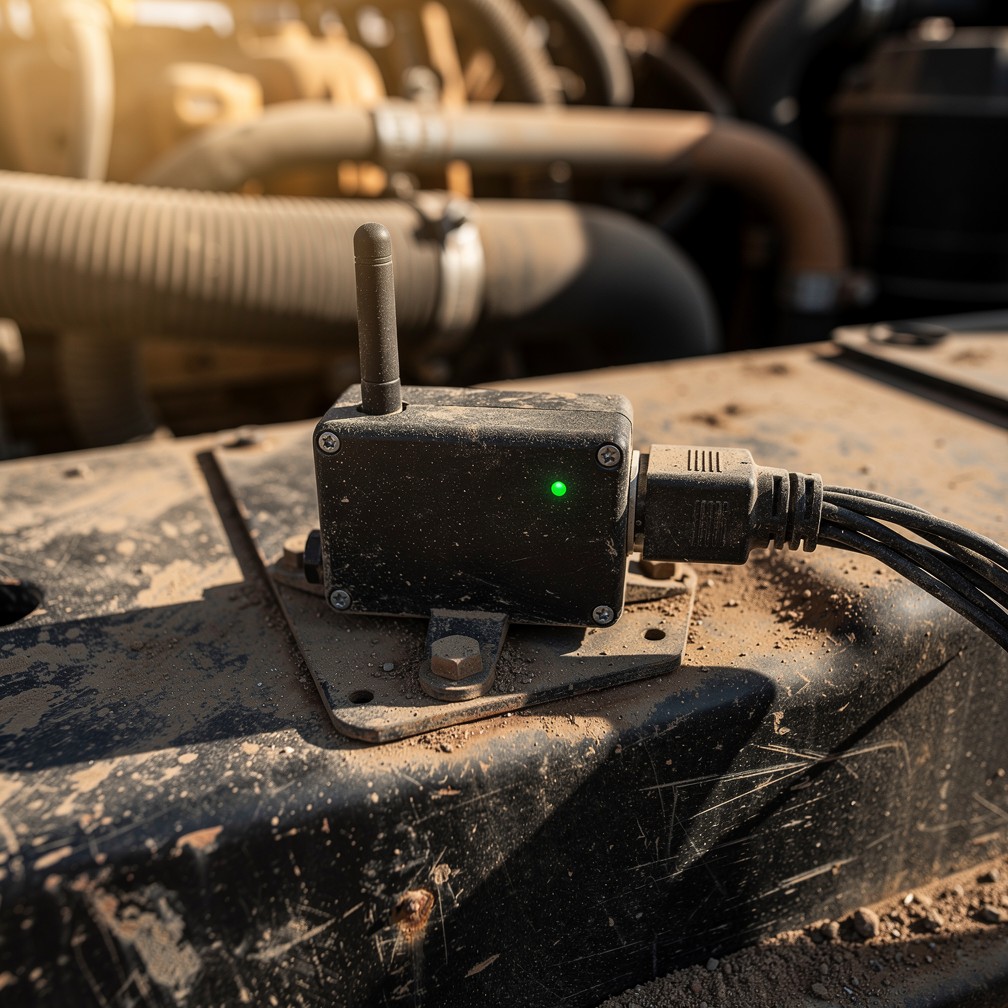
Telematics is a system that collects data from a machine and sends it wirelessly to a computer or phone. A small device on the machine reads the engine’s sensors. It reports how long the engine ran, how much fuel it used, where the machine sat, and whether anything is wrong.
Think of it as a fitness tracker for a bulldozer. A fitness tracker doesn’t make you exercise. It shows you how much you actually moved, so you can’t fool yourself. Telematics does the same for a fleet. It replaces guesses with a record.
The precise version: telematics pairs onboard sensors with a cellular or satellite link. It logs operating data over time and delivers it to a fleet manager remotely.
How much fuel are we talking about?
Now scale up. A large fleet that normally used 30,000 gallons of diesel a week saved about 6,000 gallons a week (20%) by managing idle time better. That is one fleet’s result, not a guarantee. The typical gain is smaller: using telematics can cut nonproductive idling by 10–15% on average.
Applied to the excavator above, a 10–15% cut in idling would save roughly 40–60 gallons a year. That is our arithmetic, combining two sources. Small per machine. Real across a fleet and many years.
Why Colorado sites idle more
That matters here. Colorado winters, especially at elevation, push operators to keep engines running for heat and to avoid cold starts. The source does not give a Colorado-specific figure. But cold weather is a known driver of idling, and that makes idle data more useful, not less, on Front Range and mountain jobs.
Idling costs more than fuel
Too much idling is hard on a machine’s engine and aftertreatment system. The aftertreatment system is the set of exhaust parts that clean diesel emissions before they leave the tailpipe. A cold, lightly loaded engine doesn’t run hot enough to keep those parts working well.
Idling also adds engine hours, the running-time count that sets service intervals and affects resale value. An hour at idle counts the same as an hour digging.
Speaking one data language
Most fleets mix brands. Each brand once had its own data format, which made comparison hard. A shared standard fixes that.
The Association of Equipment Management Professionals (AEMP) introduced its telematics data standard in 2010. Its latest version, AEMP 2.0, is also known as ISO 15143-3. The standard sets common data elements for earth-moving machinery, including operating hours, cumulative fuel, idle hours, fuel and DEF remaining, caution codes, and engine condition, so mixed fleets can be managed from one place. (DEF, diesel exhaust fluid, is a liquid the aftertreatment system uses to reduce emissions.)
Manufacturers expose this data through an API, a defined way for one piece of software to request data from another. For example, Caterpillar’s ISO 15143-3 API lets fleets pull data from Product Link-connected machines into their own applications, covering machine health, fuel usage, operating and idle hours, and location.
Turning reports into savings
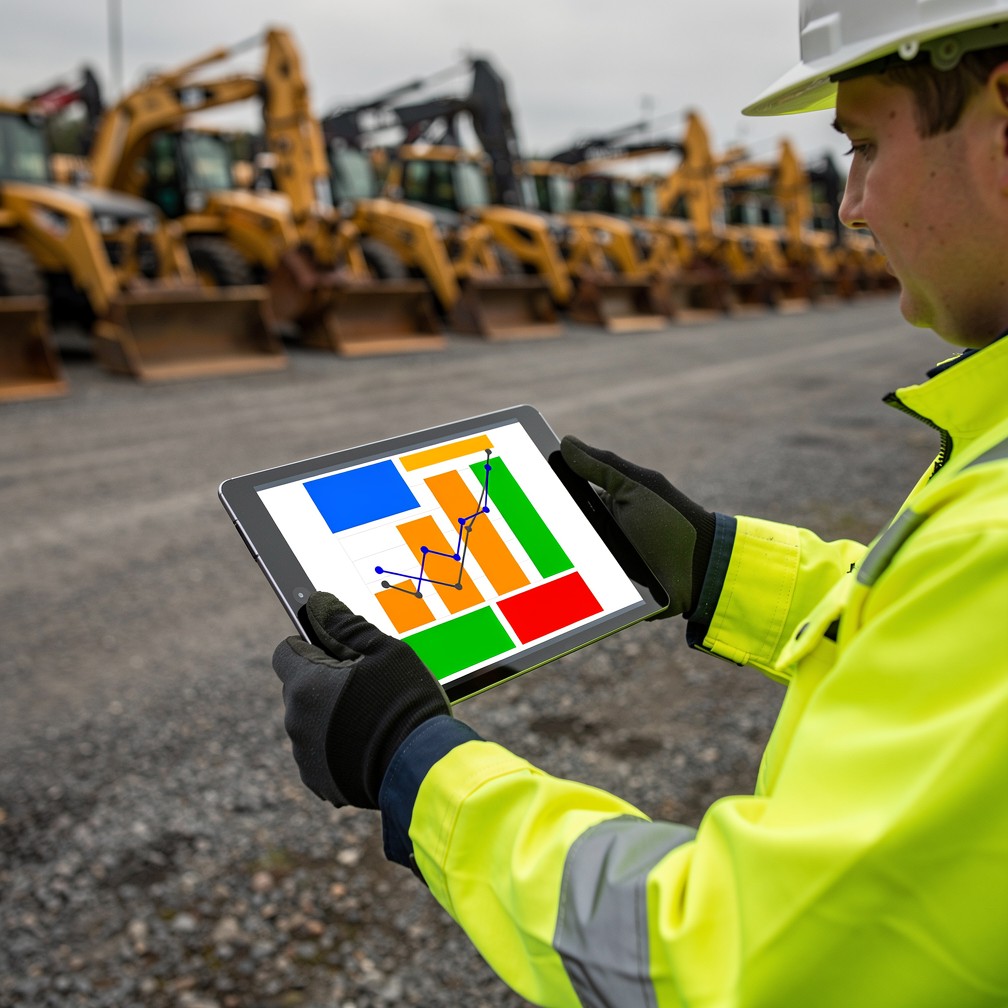
Data alone saves nothing. Without telematics, managers lack the visibility they need to set procedures and change how operators behave. With it, the work becomes a loop:
- Measure a baseline. Record idle percentage for each machine over a few weeks of normal work.
- Find the outliers. Sort by idle time. Look for machines or tasks that idle far above the rest.
- Find the cause. Ask why. Waiting on trucks, poor sequencing, and cold-weather habits each need a different fix.
- Set a clear rule. Write a specific idle procedure, such as a shutdown time limit, with exceptions for genuine cold-start needs.
- Share the numbers with operators. People change habits when they can see their own results.
- Re-measure. Compare against the baseline. Keep what worked. Adjust what didn’t.
Health data: fixing machines before they fail
The same feed that tracks idling also tracks machine health. Remote monitoring of engine hours lets equipment managers schedule preventive maintenance at better times, and plan service for when downtime will do the least harm.
Predictive maintenance goes a step further. It uses data patterns to estimate when a part will fail, then services it first. A research review reports that OEMs such as Caterpillar have combined predictive analytics with telematics to plan maintenance, cutting equipment downtime by 15–30%. That figure comes from manufacturer programs summarized in a review, not a controlled trial. Treat it as a reported range, not a promise.
Where the evidence stops
The sources show that idling is common, measurable, and reducible. They show real fleets cutting fuel use. They don’t show that every fleet will hit 20%. Results depend on the work, the weather, and whether managers act on the data. A report nobody reads saves nothing.
The bigger picture
At Solid Earth, we’ve built in Colorado since 1996, and 3D machine control and GPS grading have been standard across our fleet since 2015. Telematics belongs to the same trend: machines that report what they’re doing, so crews and owners can decide with facts instead of guesses. For municipalities and developers, that means less wasted fuel and fewer surprise breakdowns on the jobs they pay for.
Have a project in mind? Start the conversation with Solid Earth.
Images are presented for illustration purposes only.We use real photographs when we need to show what was happening at a real event.
About the Author: Solid Earth

Related Posts


Recent Works