

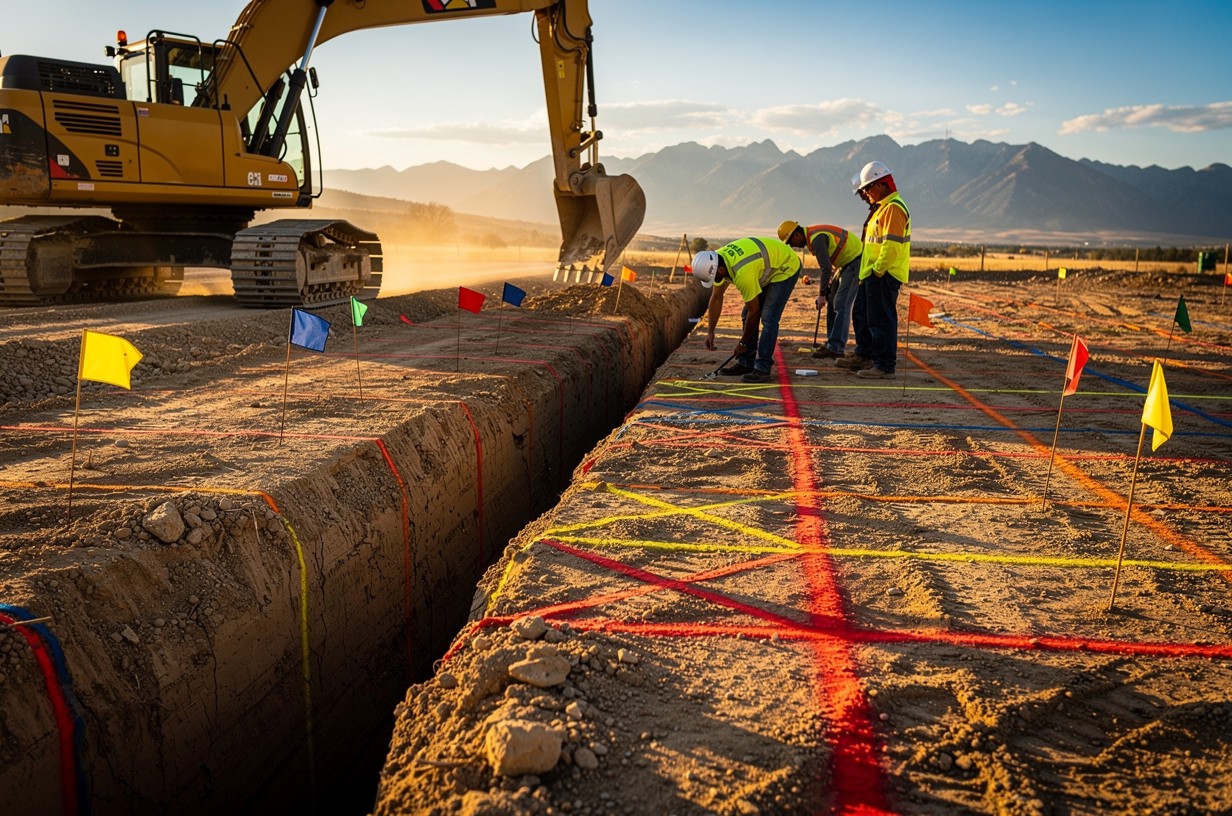
A utility strike is rarely an accident of the moment. It is usually the result of a missed step days or weeks earlier, such as a late locate request, an expired ticket or a destroyed mark that was never replaced. Colorado law sets clear obligations for everyone who digs and everyone who owns buried infrastructure. Owners, developers and contractors who understand those obligations can plan schedules around them rather than react to them.
The Law Applies to Every Project That Disturbs the Ground
No excavation in Colorado is too small to require a locate. Colorado law requires a locate request any time a project moves or disturbs the ground, and both homeowners and contractors must contact Colorado 811 before they dig. A locate request, often called a ticket, is the formal notice that prompts utility owners to identify and mark their lines at a work site.
The rule does not distinguish between a mainline sewer trench and a fence post. Ground disturbance is the trigger. For civil projects, that includes potholing, test pits, grading and boring, not only open trenching.
The Clock Starts Three Business Days Out
Locate timing is a scheduling constraint, not a formality. Under Colorado’s One Call Law, C.R.S. § 9-1.5-103, excavators must contact 811 at least three business days before excavating. Weekends and holidays do not count toward that window.
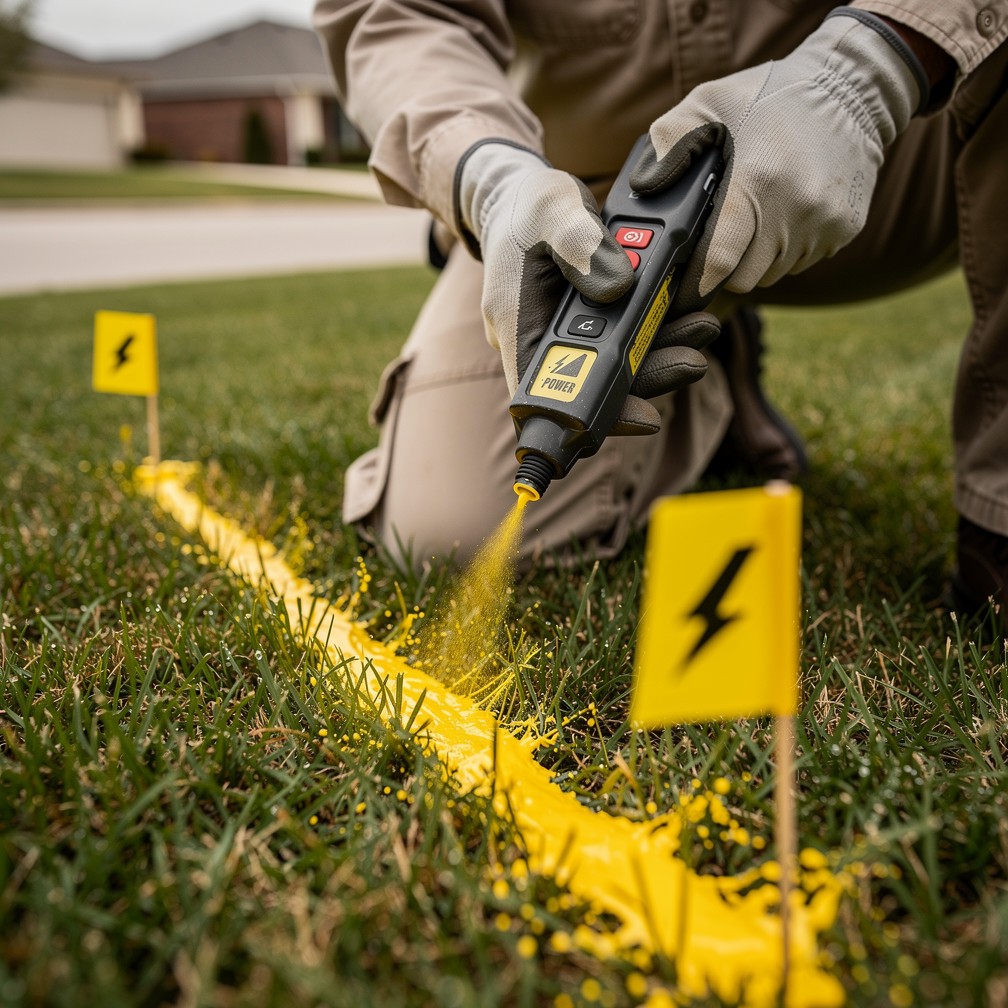
The same statute places duties on the other side of the ticket. Underground facility owners, the utilities and agencies that own buried lines, must maintain an active Colorado 811 membership and accurate records of their infrastructure. They must locate and mark their facilities within two full business days of a request. The only exception is a documented agreement between the excavator and the locator to extend the due date.
Emergencies follow a compressed timeline. Facility owners must respond to emergency locate requests within one hour during business hours and within two hours after business hours. That provision exists for genuine emergencies, such as a main break. It is not a workaround for a late request on planned work.
Long Projects Require Active Ticket Management
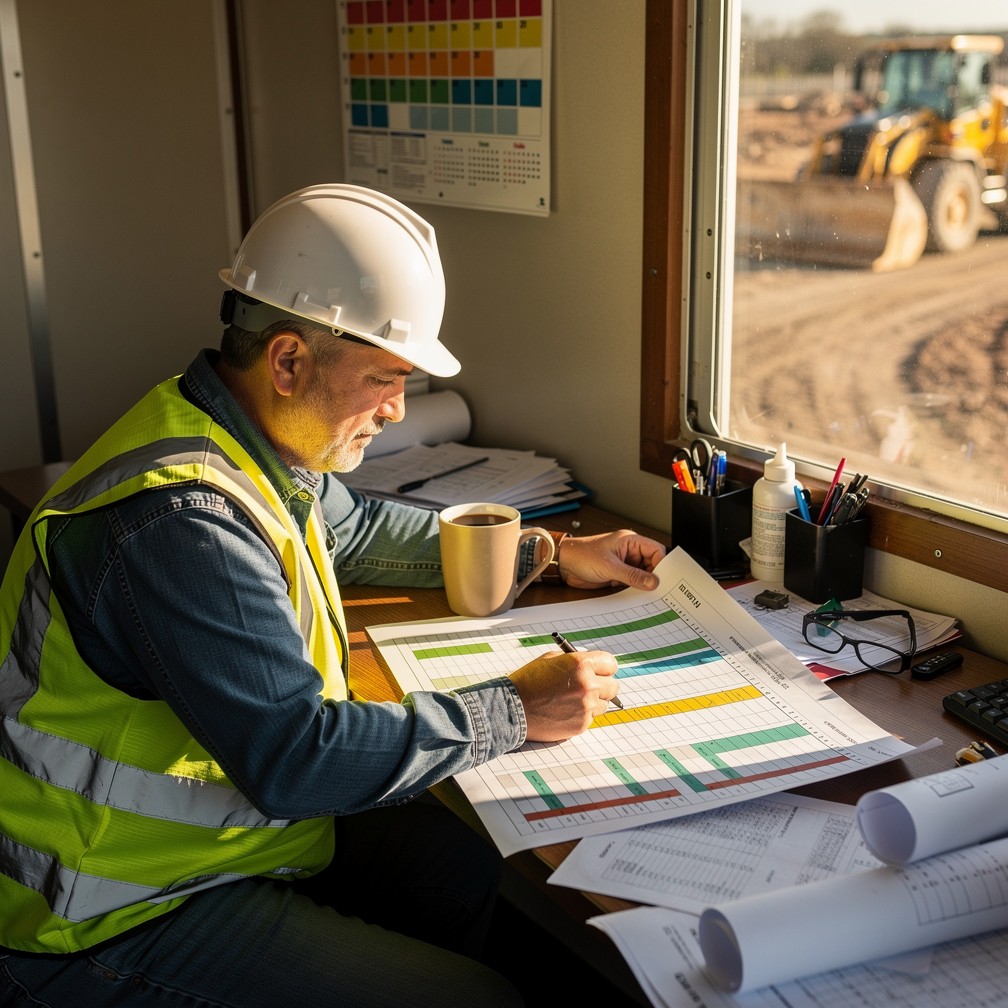
A locate ticket is not permanent. If a Colorado project runs longer than 30 days, the excavator must request an update or a new ticket at least two business days before the locate marks expire. On multi-month utility and earthwork projects, that means ticket expiration dates belong on the project schedule alongside inspections and material deliveries.
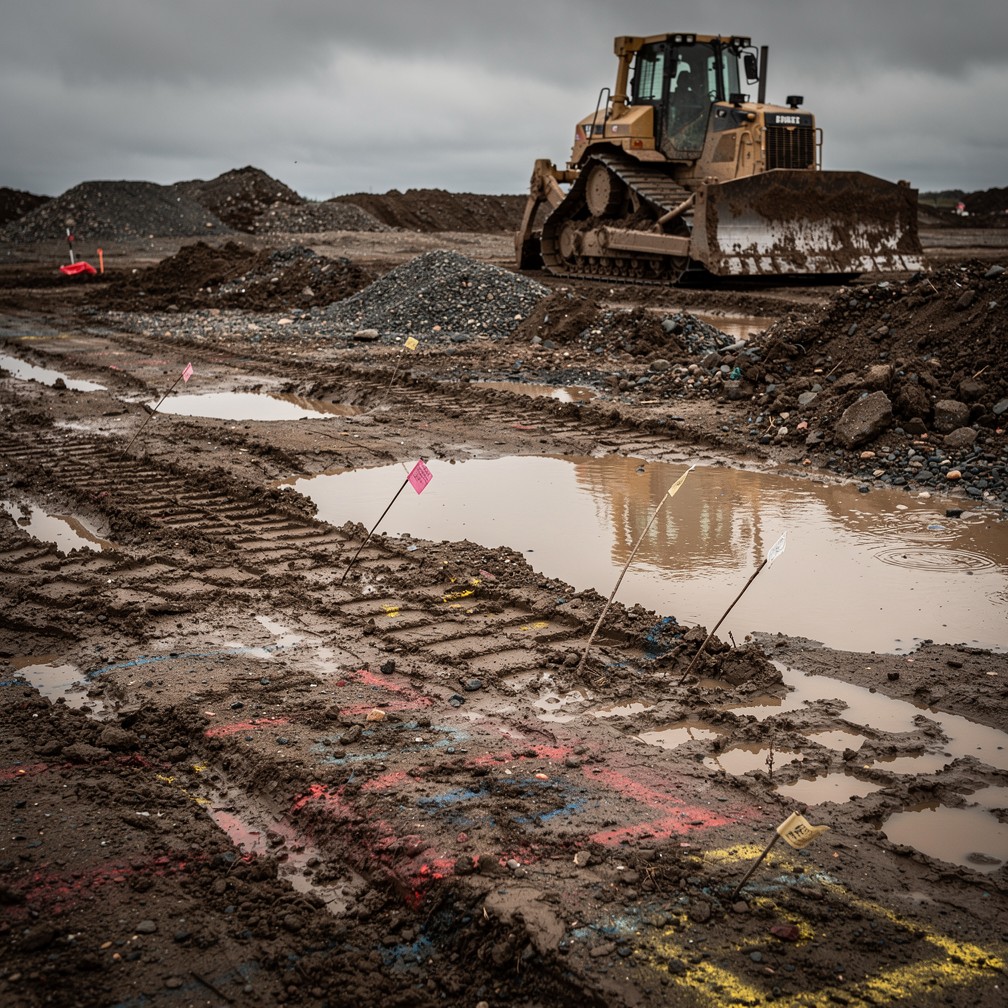
Marks also have to survive the work itself. If locate marks are destroyed during a project, the excavator must stop all digging and contact Colorado 811 to request re-marks. Paint and flags rarely last through mass grading, rain events and heavy equipment traffic. A crew that keeps digging after the marks are gone is digging blind, and the law treats it that way.
The Real Cost of a Strike Is Far Larger Than the Repair
Utility damage is a national problem measured in tens of billions of dollars. The Common Ground Alliance (CGA), the national association focused on damage prevention for underground infrastructure, estimates in its 2025 national economic impact study that damage to underground utilities costs the U.S. $83.2 billion a year. That figure is based on nearly 700,000 estimated damages.
The repair bill is the smallest part of that number. CGA’s report found that direct repair costs are only 5.9 percent of what utility damage actually costs. Business interruption, emergency response, property damage, community impact and other consequences make up the rest.
For a municipality, those indirect costs land on residents who lose water service, businesses that close for the day and emergency crews pulled from other calls. For a developer, they show up as delay, claims and strained relationships with utility owners. For a contractor, a strike can stop a job and put workers at serious risk, particularly when gas or electric lines are involved.
The Industry Is Not Yet Moving Fast Enough
Damage rates are not falling at the pace the industry set for itself. CGA’s 2024 DIRT Report, which draws on the Damage Information Reporting Tool, analyzed 196,977 unique damage reports from 2024. It found the industry is not on track to meet CGA’s goal of cutting damages by 50 percent over five years.
The causes are concentrated, which means they are addressable. According to the same report, the top 10 root causes accounted for 85 percent of all reported damages to buried utilities. Two of those causes sit squarely with the excavator: improper excavation practice, and failure to shore the excavation or support exposed facilities.
That second cause links damage prevention directly to trench safety. An unsupported trench wall endangers the crew working inside it. It also endangers the lines that run alongside or across it. Shoring and facility support are not separate checklists. They are one discipline.
What Project Owners Should Expect From an Excavator
Damage prevention is a measurable part of contractor qualification. Owners and developers evaluating bids for underground work can reasonably ask how a contractor handles the following:
- Request timing. Locate requests should be built into the schedule ahead of the three-business-day minimum, not treated as a last-minute task.
- Ticket tracking. On projects longer than 30 days, someone should own ticket renewals and track expiration dates.
- Mark preservation. Crews should know that destroyed marks mean stopping work and requesting re-marks.
- Excavation practice. Protective systems and support for exposed facilities should be planned before digging, not improvised in the trench.
Solid Earth has built water, sanitary sewer and stormwater systems in Colorado since 1996, and we received Bechtel Excellence Awards for safety and quality as a Bechtel project partner. Underground utility work rewards contractors who treat the locate process as the first phase of excavation rather than a step before it.
The First Bucket Is the Last Decision
By the time a bucket breaks ground, the outcome is largely set. The request was made on time or it was not. The ticket is current or it is expired. The marks are visible or they are gone. Colorado’s One Call Law gives excavators and facility owners a shared framework, and the national data shows the cost of ignoring it. Projects that treat locates as part of the schedule, not an obstacle to it, protect crews, communities and budgets at the same time.
Have a project in mind? Start the conversation with Solid Earth.
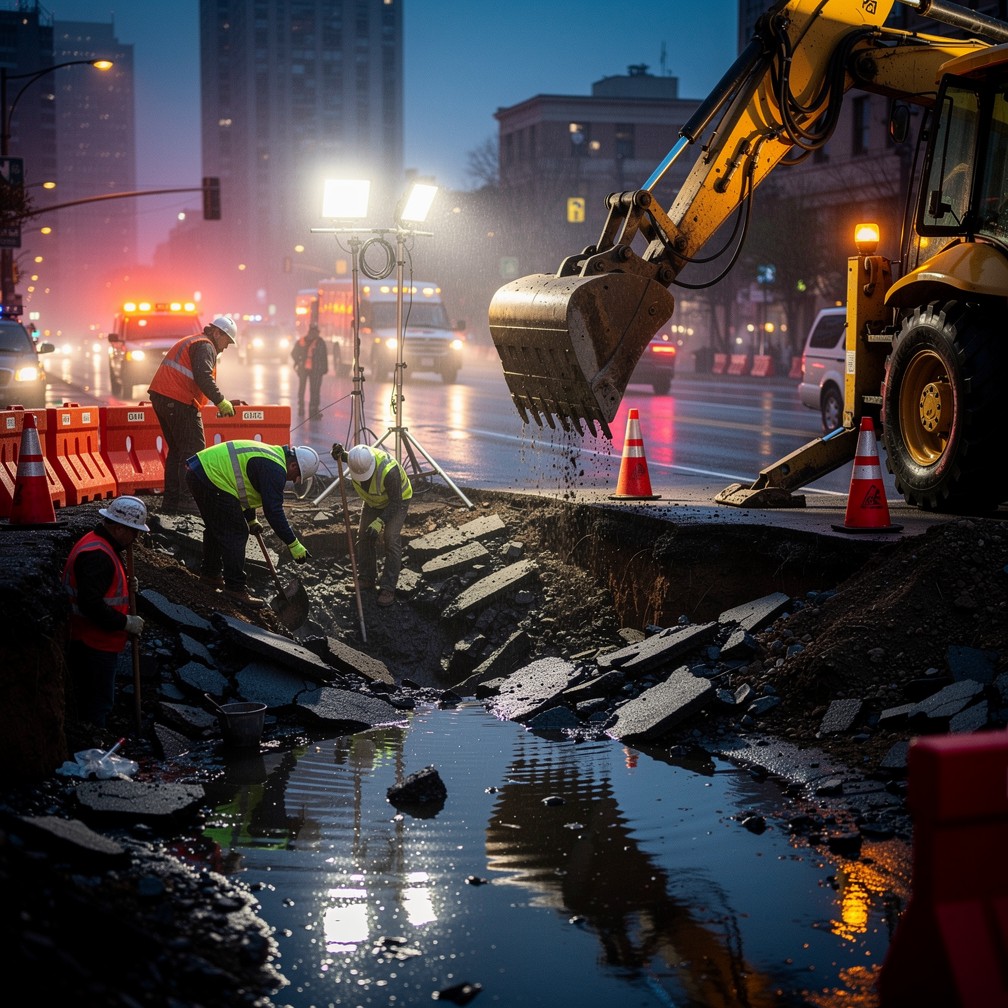
Images are presented for illustration purposes only.We use real photographs when we need to show what was happening at a real event.
About the Author: Solid Earth

Related Posts


Recent Works