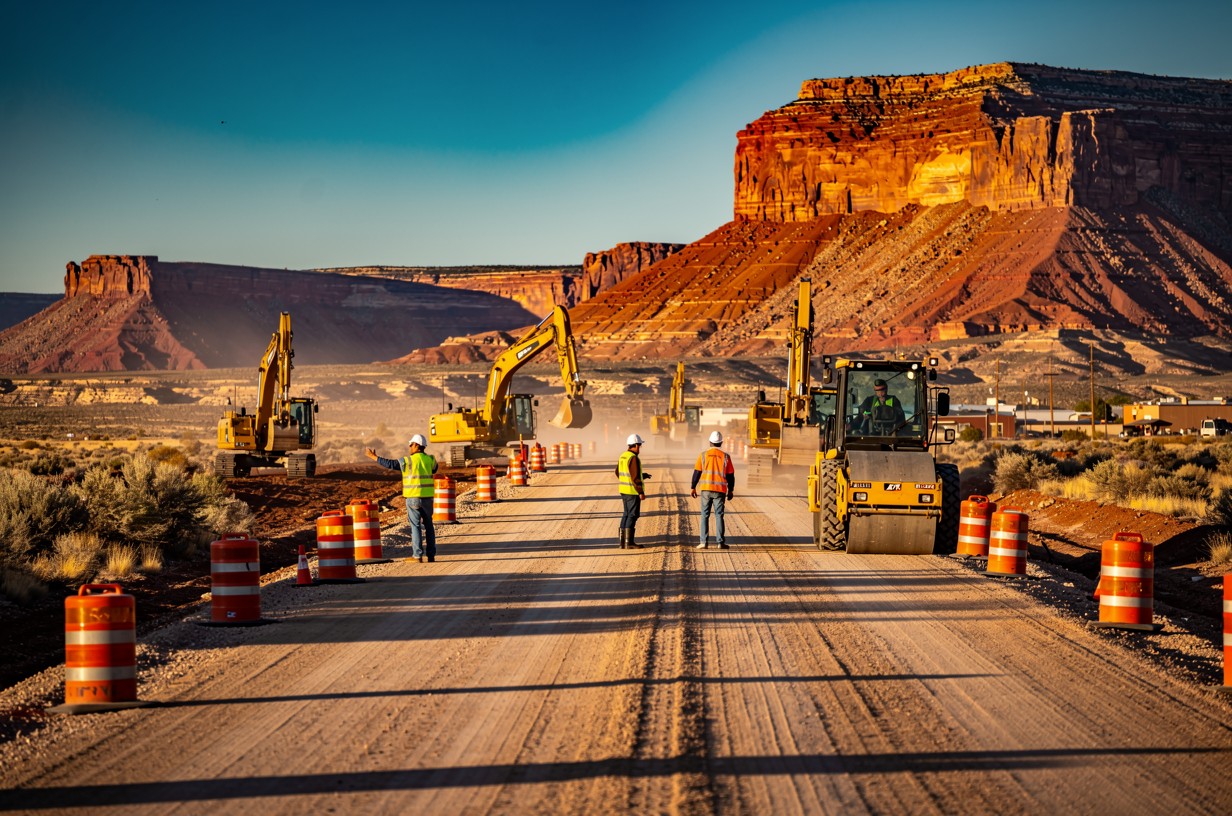

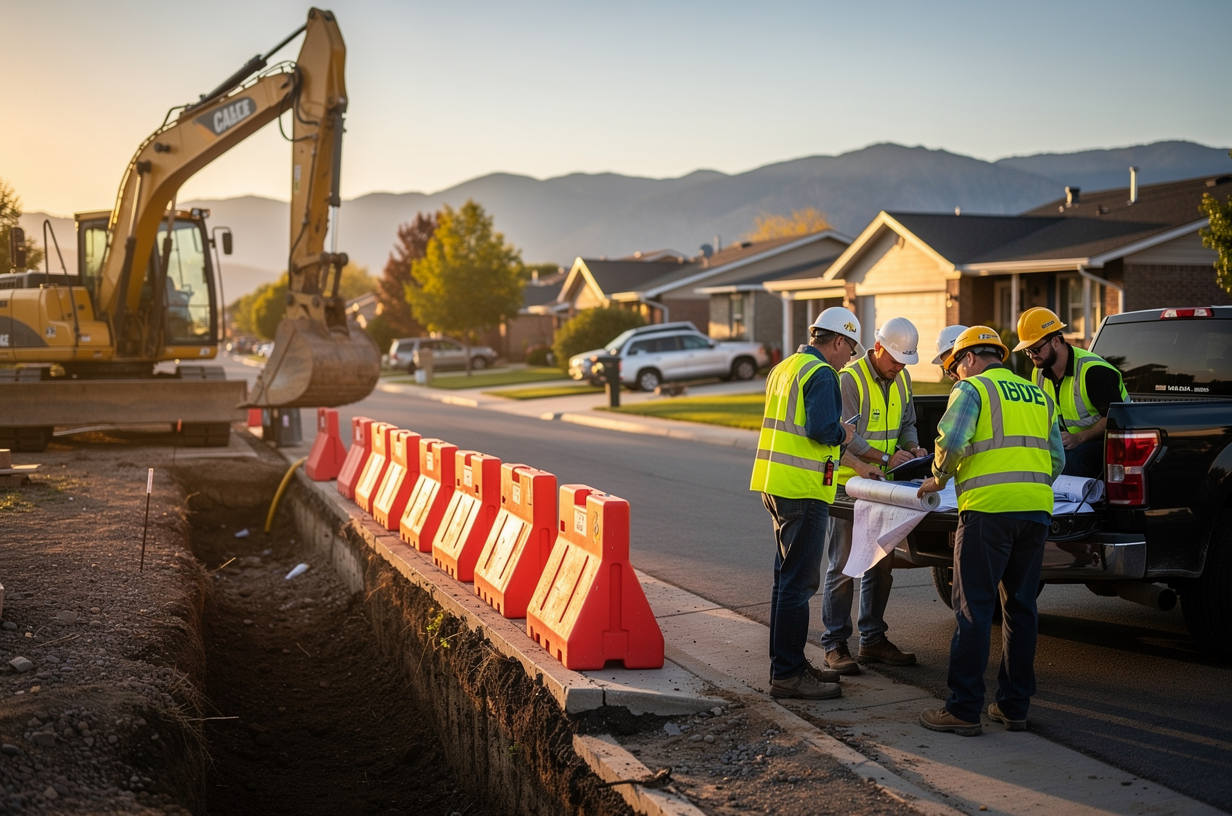
A new sidewalk, water main or storm drain looks like it appears overnight. It doesn’t. Before any equipment moves, a Colorado public project passes through a set of legal gates. Each gate exists to protect public money.
We are Solid Earth, a woman-owned civil constructor based in Pueblo and working in Colorado since 1996. We won our first municipal water and sanitary contract in 2002. This article walks through the path from approval to first shovel, so owners, contractors and new crew members know what each step means.
The short version
Think of it like buying a house with a mortgage. You decide you can afford it. You make a formal offer. The lender checks you out. You sign. Then you get the keys. A public project follows the same order. The difference is that every step is written into law, and the public can see it.

The precise version: Colorado’s Construction Bidding for Public Projects Act, C.R.S. § 24-92-103, says public works contracts should be awarded through competitive sealed bids. A competitive sealed bid is a price submitted in private by each bidder. All bids are opened together at a set time, so no bidder sees another’s number first.
The steps, in order
- The governing body approves the project. A city council or similar body decides to fund the work. Approval rules vary by city. In Denver, for example, a Department of Public Works contract states that any contract calling for payments of $500,000 or more must be approved by City Council acting by ordinance. An ordinance is a formal local law, not an informal vote. Other municipalities set their own thresholds.
- The owner posts a solicitation. A solicitation is the public request for bids. It includes plans, specifications and a deadline. The City of Pueblo posts its public works solicitations online. Recent examples from mid-2025 include Bid 25-067, “Concrete Improvements – CDOT Sidewalks,” published June 24, 2025 and closed July 16, 2025, and Bid 25-062, “Asphalt Improvements – Lexington Road and Saratoga Road.” Watching these postings is how contractors learn what their own community plans to build.
- Bidders confirm they are eligible. Some owners require prequalification: a check of a firm’s experience, finances and capacity before it may bid. On Colorado Department of Transportation (CDOT) highway and bridge projects, general contractors must be prequalified before bidding; subcontractors need not be. CDOT’s Contracts and Market Analysis Prequalification Unit handles this, and prequalification is valid for one year. These are CDOT rules. A city project may have different requirements, so read each solicitation.
- Bidders submit sealed bids with a bid bond. A bid bond is a guarantee from a surety company that the bidder will sign the contract if it wins. On Colorado public construction contracts estimated above $50,000, a bid bond is required.
- Bids are opened and evaluated. Once submitted, a bid is hard to take back. Under C.R.S. § 24-92-103(6), a bidder can generally withdraw only for a mistake such as a math error or a clear omission. Having bid too low is not enough. On projects with no federal money, Colorado also applies a reciprocal bid preference. A Colorado bidder gets the same edge over an out-of-state bidder that the out-of-state bidder’s home state gives its own firms.
- The contract is awarded and executed, with bonds. The winner signs the contract and provides two more bonds. A payment bond guarantees that subcontractors and suppliers get paid. A performance bond guarantees the work gets finished. Both are required on public contracts over $150,000, and municipalities have similar rules.
- The owner issues the Notice to Proceed. The Notice to Proceed (NTP) is the written go-ahead. Under CDOT rule 2 CCR 601-10, Section 4.24, the contractor receives it after the contract is fully executed. The notice says when work may begin and when contract time starts. Contract time is the clock for finishing the job. Missing it can carry penalties, so the NTP date matters.
What happens after the NTP
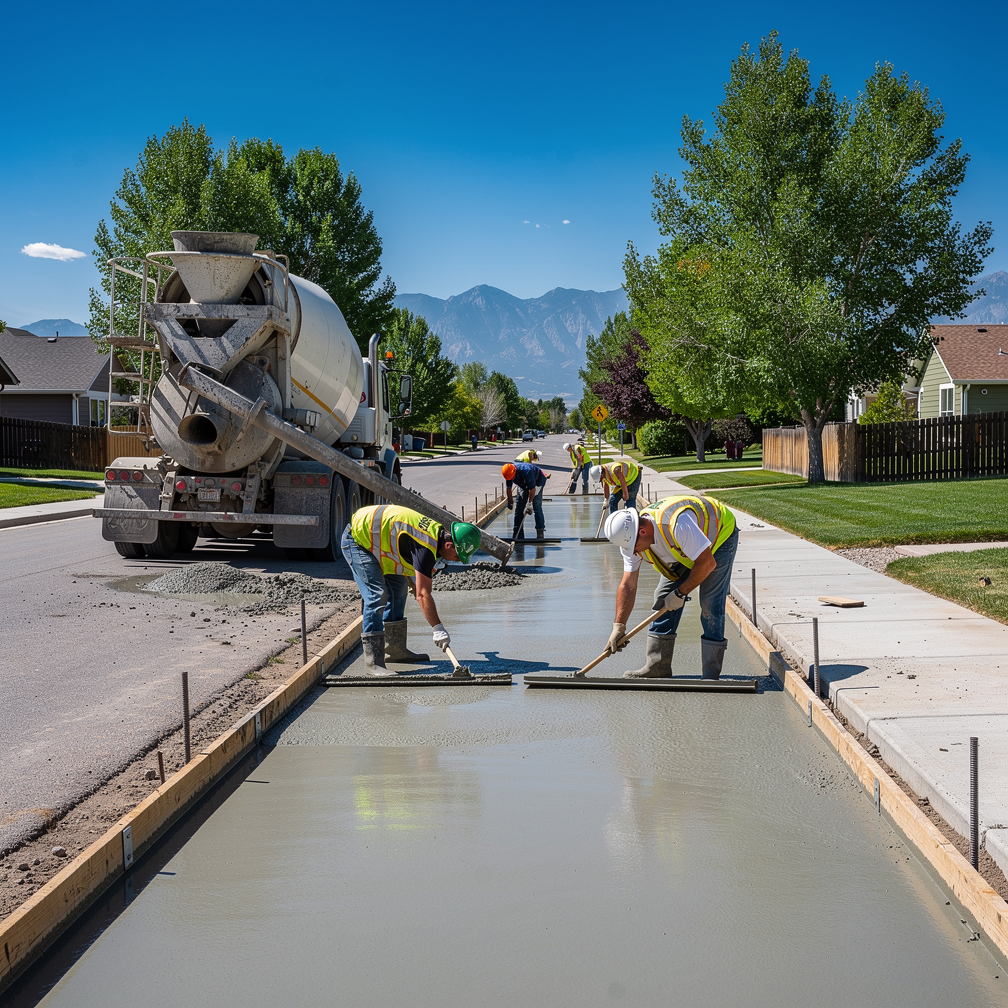
Work starts, and the contractor bills as it goes. Colorado law says a public entity must pay at least 95% of the calculated value of completed work. The rest is called retainage: money held back until the contract is satisfactorily completed and finally accepted. It gives the owner leverage to get the last details done right.
Where this overview stops
The state statutes above set a floor. Cities and special districts add their own rules on top. The CDOT steps apply to CDOT projects, and the Denver threshold applies to Denver. Always read the specific solicitation and contract. They control.
Why the process favors prepared firms
Every gate rewards contractors who price carefully, carry bonding capacity and keep paperwork current. Public owners often track business certifications too. Solid Earth holds M/WBE, SBE and EBE certifications.
Have a project in mind? Start the conversation with Solid Earth.
Images are presented for illustration purposes only.We use real photographs when we need to show what was happening at a real event.
About the Author: Solid Earth

Related Posts





Recent Works