

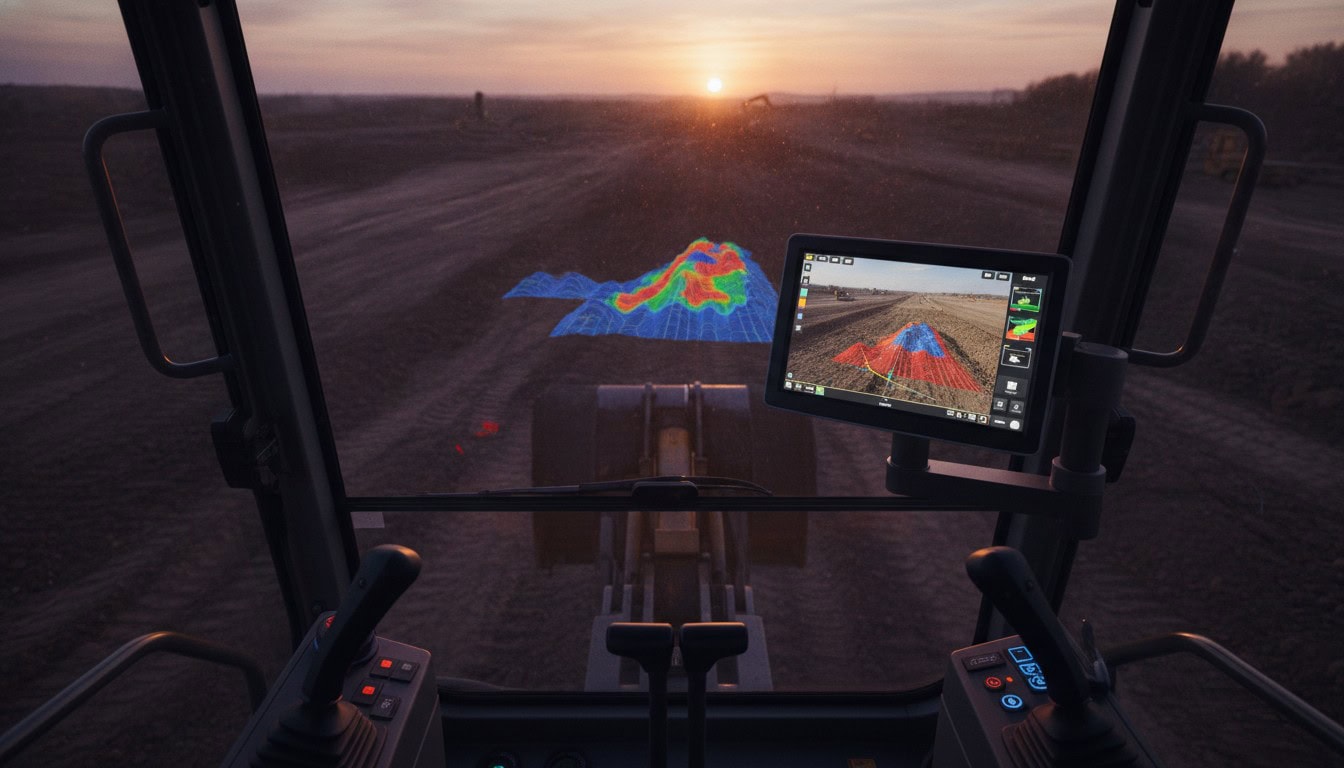
Walk past one of our machines mid-shift and look inside the cab. Next to the operator you’ll see a screen with the project’s 3D design surface on it — the same one the engineer drew. That’s not a gadget. It changed how we build.
Before machine control, grade lived on wooden stakes and in a few very experienced heads. Every pass was an approximation checked after the fact. Today the design rides in the cab: the blade knows where finish grade is within centimeters, the operator sees cut and fill in real time, and the checker’s role shifts from catching mistakes to confirming quality.
The payoff isn’t just speed, though we get plenty of that. It’s that curiosity compounds. When an operator can see the whole surface, they start asking better questions — why the pond bottom steps here, why the pad drains that way. Cross-trained crews plus visible designs equals fewer surprises for everyone, including the owner writing the checks.
The tools will keep changing. The standard doesn’t: do the work right, and leave behind something that lasts.
About the Author: Solid Earth



Recent Works